How to Empower Student Voices: From Whispers to Roars
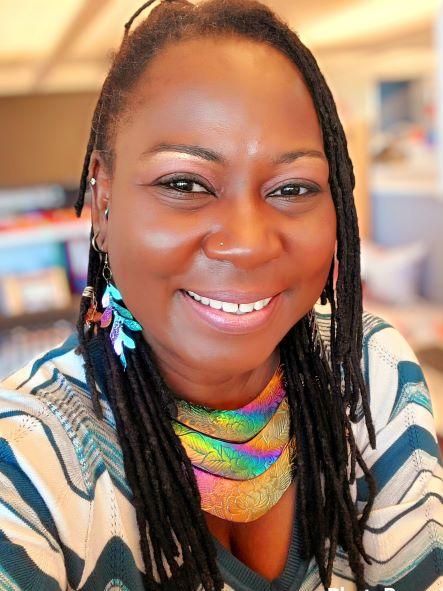
Nika Hollingsworth (she/her/hers)
Manager of Community and Faith Based Initiatives
Boston Public Schools
in Boston, Massachusetts
Topics

Next generation learning is all about everyone in the system—from students through teachers to policymakers—taking charge of their own learning, development, and work. That doesn’t happen by forcing change through mandates and compliance. It happens by creating the environment and the equity of opportunity for everyone in the system to do their best possible work.
Empowering young people to raise their voices is not just a feel-good notion; it's critical to create a thriving and equitable educational system.
For much of my young life, my voice felt like a whisper in the wind. My ideas, thoughts, and emotions were turning into a hurricane within me; however, I didn’t feel I had a safe space to share them, especially not with an adult. It wasn’t that I wasn’t speaking; it was that I wasn’t being truly heard. Or worse, I was being heard, but no one was truly listening. Often my expression was dismissed as an overreaction or that I was “too young” to be stressed out or to have certain emotions tied to traumatic experiences like displacement and grief that, truthfully, most adults struggle to handle.
This teacher didn’t just grade my assignments; she saw me.
This experience is far too common for young people navigating the complexities of adolescence. Often dismissed as “just a phase” or lacking the life experience to offer valuable insights, the voices of youth are frequently diminished, leaving a void where connection and understanding should be. It wasn’t until I reached the 10th grade, under the guidance of a remarkable high school English teacher, that this changed for me. This teacher didn’t just grade my assignments; she saw me. She helped me turn my whisper into a roar by taking time to recognize and nurture my talent for both academic and creative writing, offering genuine acknowledgment and guidance that resonated deeply.
She also listened when no one else would. My biggest concern in high school was how I was going to afford college. I often expressed this concern, and it was often dismissed. I was told I had plenty of time to “figure it out” when I really didn’t. I truly felt hopeless. That same teacher took the time to listen to my concerns about my future and referred me to my school’s Academy of Travel and Tourism pathway through the National Academy Foundation. Her genuine care and attentiveness helped me forge a path toward my postsecondary education goals.
These simple acts of recognition were profoundly empowering, providing a sense of relief I hadn’t realized I desperately needed. They were a validation that my thoughts and feelings mattered—that I mattered. This personal experience illuminated the crucial importance of truly listening to young people.
Today, I’m a proud Boston Public Schools (BPS) alum and now the manager of community and faith-based initiatives for the district. I’ve seen firsthand the transformative power of education. Yet, I’ve also witnessed the consequences of dismissing the very voices we are meant to uplift: our students. That’s why amplifying youth voices isn’t just a bunch of buzzwords; it’s a fundamental necessity for creating equitable and thriving schools and communities. And it starts with understanding what student empowerment really means.
What Is Student Empowerment?
To me, student empowerment means giving young people real voice, choice, and ownership in their education, so they move from passive recipients to active participants in how they learn and how their school works. It starts with adults who truly listen, like that English teacher did for me, and it grows when student input actually changes decisions.
It isn’t enough for young people to simply go through the motions. It is important that they are seen and valued as active stakeholders with valuable perspectives that can contribute to creating a better learning experience for everyone. In practice, that comes down to three core elements:
Voice and choice: Students have a say in what they learn and how they demonstrate it.
Agency and ownership: Students take responsibility for their own growth and learning.
Shared decision-making: Student input influences decisions in the classroom, the school, and the wider community.
Why Is Student Empowerment Important?
The voices of students, especially those from marginalized communities, are crucial to any educational structure and beyond for several reasons:
Equity and inclusion: Students from marginalized communities bring unique experiences, perspectives, and challenges that are often overlooked in traditional educational settings. Their voices help to uncover systemic inequities and inform culturally responsive practices. By listening to these students, educators can identify and address disparities in academic outcomes, access to resources, and disciplinary practices that disproportionately affect marginalized groups.
Engagement and relevance: When students feel heard, they are more likely to be engaged in their learning. Youth have unique perspectives on current trends, technologies, and social issues, and their input can help shape a curriculum that is relevant to their lives, interests, and cultural backgrounds.
Ownership and confidence: Giving students a voice empowers them to take ownership of their education and become active participants in their learning process. This can lead to increased motivation, academic achievement, a stronger sense of belonging, higher self-esteem, and greater self-efficacy.
Better decisions and accountability: Because the youth’s perspective is often shaped by their lived experiences, they are invaluable in shaping policies and programs that directly impact their lives. We, as adults, often assume we know what’s best, but without actively listening to and incorporating youth perspectives, we risk creating solutions that miss the mark entirely. When students are empowered to share their experiences, it also creates a platform for them to raise concerns about issues such as bullying, discrimination, and inadequate resources, prompting necessary action and promoting transparency.
Advocacy and civic skills: Encouraging student voice helps develop crucial skills in advocacy, critical thinking, and communication. These skills empower students to become agents of change in their communities and beyond, contributing to broader social justice and equity goals. It sends a message that all students are valued, respected, and deserve a high-quality education.
At BPS, our community knows that students need to have a safe and inclusive environment where they can feel comfortable sharing their perspectives and ideas. One of the key BPS district goals is to amplify all student voices, including the voices of marginalized students. Leveraging both internal and external partnerships allows the district to employ strategies to empower students to take ownership of their learning, contribute to the community, and actively participate in decision-making processes in the classroom and beyond.
6 Empowering Student Strategies from BPS
So how can you empower students? In my work with Boston Public Schools, I’ve seen it come down to six strategies:
Build trusting relationships and truly listen
Create safe, inclusive spaces
Give students choice through inquiry- and project-based learning
Include students in real decision-making
Partner with families
Connect students to platforms beyond school
Here’s what each one looks like in practice.
1. Build Trusting Relationships and Truly Listen
The assistant director for BPS’ Office of Youth Leadership, Tewahedo Haimanot, strongly focuses on relationships, indicating that there is no greater privilege in the work he does than the ability to form relationships with our young people. It may take time, but once a student feels seen and heard, they begin to take full ownership of their lives. He looks forward to the opportunities daily to connect and talk to them on a human level about their lives, what wins they are celebrating, what areas need support, and their hopes and dreams.
When a student knows they are cared for as a human and not just as a student, they become more confident in advocating for the policies and projects that are near and dear to them. Keeping an open mind is also key to student engagement. As educators and mentors programmed to stand and teach students, Tewahedo finds that it is also important to sit and listen to them.
“I’m always curious to see what I can learn from the next generation, what is changing in our world, and what perspectives they have to improve their environments. We need to create authentic, meaningful relationships with all the young people we come across, but if we have an open mind as well, we begin to encourage them to speak and share their stories.”
Just like Tewahedo mentioned, relationships are key. By investing time in building trust and genuine connections with students, educators and mentors can create an environment where students feel supported and empowered to speak up.
2. Create Safe, Inclusive Spaces
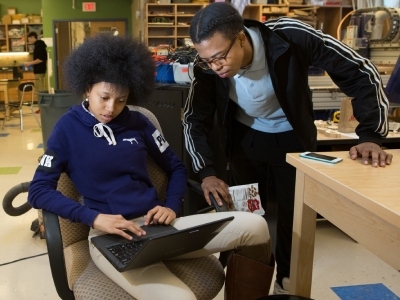
Just as my teacher made space for me, students need to feel safe before they’ll share their ideas. Educators can play a pivotal role in creating safe spaces where students feel comfortable sharing their thoughts and ideas. This can be achieved through fostering a culture of respect, encouraging active listening, and providing opportunities for student-centered learning activities.
Jermaine Tulloch, the BPS director of academic mentoring, is intentional in his approach to empowering students to take ownership of their learning journey and contribute meaningfully to the community by creating an environment where they feel valued, trusted, and responsible for their own growth. Jermaine shares his insight on creating safe spaces for students:
“Creating a safe and inclusive environment where all students feel comfortable sharing their perspectives and ideas requires intentional strategies, clear communication, and fostering a culture of respect. Set clear expectations for respect and inclusion by encouraging active listening and modeling inclusivity.”
Safe spaces aren’t limited to the classroom, either. Across BPS, Family Liaisons often create spaces where students feel comfortable sharing their experiences and perspectives, building the kind of trust that allows students to express themselves freely.
3. Give Students Choice through Inquiry- and Project-Based Learning
Jermaine’s approach is multi-layered. He incorporates student-centered activities to encourage students to engage in activities that require them to explore, experiment, and collaborate. Jermaine helped his students develop and publish a book entitled Mentoring Matters Volume 1, which is accompanied by a Mentorship Matters teen journal.
Projects (such as the aforementioned), debates, and group discussions are great ways to help students take responsibility for their learning. Inquiry-based learning is a form of active learning that allows students to ask questions and seek answers. This fosters curiosity and encourages them to be self-directed learners. Additionally, he encourages choice and autonomy to help give students options in assignments, projects, or even how they demonstrate learning.
Giving students agency in this way fosters a sense of ownership over their education. It also helps develop essential skills like critical thinking, communication, teamwork, and problem-solving, which are crucial for success in life.
4. Include Students in Real Decision-Making
Amplifying student voices should not be confined to the classroom walls. Schools can explore avenues for student participation in decision-making processes at the school and district levels, and BPS offers a powerful example.
BPS’ Office of Youth Leadership leads an amazing program that is designed to cultivate leaders and community participation as well as self-advocacy. The Boston Student Advisory Council (BSAC) is a body of selected high school student representatives from across Boston Public Schools. Student leaders represent their respective high schools, serving as the primary vehicle for student voice and engagement within the district. The student council amplifies youth voices citywide, bringing together peers from every corner of the district to address the issues that matter most to them. Along the way, it builds a sense of community across schools. BSAC is comprised of 46 active members from across 20 BPS high schools.
One of BSAC’s representatives, Naomi Via-Cole (Grade 12, Dr. William W. Henderson K–12 Inclusion School), shares with us what BSAC means to her and its personal impact:
“BSAC for me is a place where I can interact with students that have different perspectives on the BPS community. Most importantly, BSAC has helped me grow as an individual, giving me the space to find my voice. As someone who is more on the introverted side, BSAC has taught me the importance of using your voice when you want to make change in your community. With BSAC, I’ve been able to find areas of discussion I’m passionate about and discover ways I can help make change.”
5. Partner with Families
Our schools have the potential to be transformative spaces. However, we can only achieve this potential if we create a culture where youth and family voice is not only welcomed but actively sought out.
In every BPS school, BPS Family Liaisons are the critical link between the school, the student, and the family. They are not only advocates for parents and guardians but also play a significant role in amplifying the youth’s voice itself in these ways:
Facilitating communication: Liaisons bridge language and cultural barriers, ensuring that youth perspectives are accurately conveyed to school staff and administrators. They help students express their needs and concerns, even when they might struggle to do so on their own.
Empowering student advocacy: Liaisons work with families to support their children in advocating for themselves. They provide guidance on how to effectively communicate with school personnel and navigate the school system. This empowers students to become self-advocates.
Connecting youth to resources: Liaisons connect youth to student assistance resources and opportunities that can help them develop their leadership skills and amplify their voices.
Acting as a conduit: Liaisons are a conduit of information between the school, the family, and the student. This allows the student to have their needs met and their voice to be heard by the correct people.
School partnerships should not be a one-way street. They must be collaborative efforts that center the voices of students as well as their families.
6. Connect Students to Platforms beyond School
In the context of Boston, a city with a rich history of social activism and diverse communities, prioritizing student voice is particularly important. It aligns with the city’s commitment to equity and provides an opportunity to create a more inclusive and just educational system that prepares all students for success in a diverse and interconnected world. Connecting students to platforms outside of school is also key to ensuring they continue to exercise the power of their voices. In Boston, those platforms reach all the way from City Hall to neighborhood nonprofits.
At the city level, the City of Boston’s Office of Youth Engagement and Advancement (OYEA) has a mission to uplift the voices and advance the lives of young people ages 14–25 through City programs, partners, and services. That mission is a vital component of a city that prioritizes the well-being of its youth. By providing platforms for young people to engage with city government, OYEA empowers them to become active participants in shaping their own futures.
Community partners carry that work into students’ everyday lives. Write Boston is a valued community partner whose mission is to foster deep learning for youth and educators. They aim to elevate and reshape the role of literacy (writing, reading, and discussion) so that all youth think critically and can use their voice to create change. Their writing program, Teens in Print (TiP), was created to amplify the marginalized voices of eighth- to twelfth-grade Boston students. This program supports youth by:
Building confidence and empowering youth: By seeing their work published and shared with a wider audience, students gain confidence in their abilities and feel empowered to use their voices.
Connecting youth with their community: The program encourages students to engage with their community, learn about different perspectives, and become active citizens.
Teens in Print is a practical application of Write Boston’s mission, providing a tangible way for young people to develop their literacy skills and use their voices to create change.
When students feel heard and valued, they are more engaged in learning, and their unique perspectives can inform and improve educational practices.
Building a Culture of Listening
Empowering young people to raise their voices is not just a feel-good notion; it’s critical to create a thriving and equitable educational system. When students feel heard and valued, they are more engaged in learning, and their unique perspectives can inform and improve educational practices. It is important to listen to our youth so we can continue to positively impact their lives. This realization is showcased through the programming and partnership efforts BPS has made to amplify student voices. However, this is not the end of the conversation.
Community partners play an essential role in providing platforms for marginalized voices to be heard, and schools and communities can explore partnerships with organizations like these to further empower student voices. In my current role, I see the importance of this work on a daily basis. When we ask our school-based partners how they are measuring success, we must encourage them to demonstrate how they are actively incorporating student feedback into their programs, including:
How they create spaces for students to share their experiences and ideas, and collaborate with educators and family liaisons to facilitate this
How they use student, school, and/or family feedback to improve programming
How students are empowered to take leadership roles
How they ensure effective communication and engagement with students as well as their families, so the students’ voices are heard
By prioritizing student voice and fostering a culture of listening, we can create a more inclusive and empowering learning environment where all students thrive…and roar!
Photo at top of BSAC Nubian Square Mural, courtesy of BPS Community Engagement
Nika Hollingsworth (she/her/hers)
Manager of Community and Faith Based Initiatives, Boston Public Schools
Nika Hollingsworth is a passionate, community driven professional who specializes in creating innovative, systematic approaches to partner outreach and relationship management. She is focused on aligning district goals and partner relationships by way of collaboration and execution of a holistic framework toward desired outcomes.