From Good Intentions to Meaningful Outcomes: Youth-Adult Partnership Practices
Ana Lindert-Boyes, Harry Frank, Katie Ingraham, and Lindsey Halman
UP for Learning
Topics
Next generation learning is all about everyone in the system—from students through teachers to policymakers—taking charge of their own learning, development, and work. That doesn’t happen by forcing change through mandates and compliance. It happens by creating the environment and the equity of opportunity for everyone in the system to do their best possible work.
The evolution of UP for Learning's Youth Advisory Council into a staffed Youth Internship Program offers schools and districts lessons on sharing real responsibility and power with youth.
How do youth-serving organizations move from doing work to and for young people toward sharing power and working with them in authentic partnership?
UP for Learning empowers youth and adults to reimagine and transform education together. As we have sought to create a model for our own organization that reflects the very principles of youth-adult partnership that we practice in our work with schools and communities, answering this question took nearly five years, multiple iterations of the design process, and a willingness to continually examine our own organizational practices.
What started as a Youth Advisory Council (YAC) evolved into a staffed internship program where young people are essential to daily operations, not just consulted from the margins. The YAC’s evolution, and its eventual transformation into the now fully implemented Youth Internship Program (YIP), offers a case study of one organization’s ongoing effort to move youth engagement from consultation toward full partnership. Now in its third year of full implementation, the YIP also illustrates the complexity of that shift: sharing power requires more than inviting young people to the table. It requires changing the table itself—including organizational structures, roles, expectations, compensation, and decision-making processes—to make meaningful youth-adult partnership possible.
Our experience gives us greater understanding of what it takes for youth-adult partnership to be successful and authentic in schools and communities. The lessons from our journey can help any youth-serving organization, whether a school or nonprofit, share power and responsibility with youth.
Stage 1: Youth Advisory Council
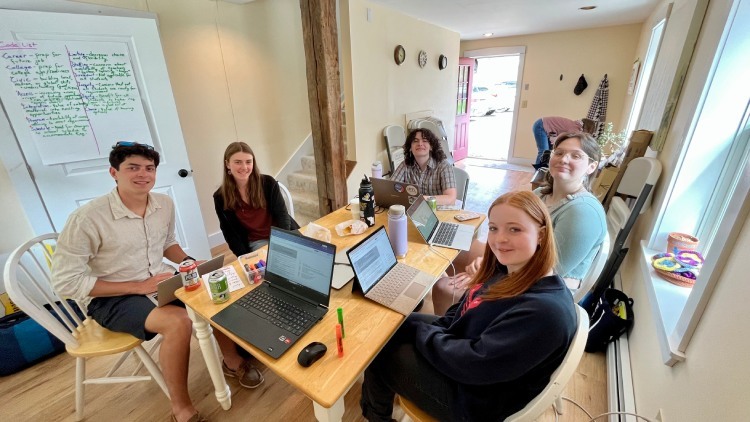
We first launched the Youth Advisory Council (YAC) in 2019, grounded in a simple idea: young people should be collaborators in shaping our programs and organizational structures while also developing as leaders in their own right. In its early years, the YAC focused intentionally on relationship building, bringing together young people who were already serving as facilitators across UP programs and partner schools. A two-day kickoff retreat at Seyon Lodge State Park (Groton, Vermont), followed by regular meetings at our Montpelier, Vermont, office, gave the inaugural members space to build trust, establish a shared purpose, and wrestle with foundational questions:
- Why are you here?
- What do you want to learn from this experience?
- What impact do you want to make?
The initial intention was for the YAC to serve as a sounding board for emerging policies, projects, organizational issues, and growth while providing members with opportunities to develop leadership skills and deepen their understanding of youth-adult partnership.
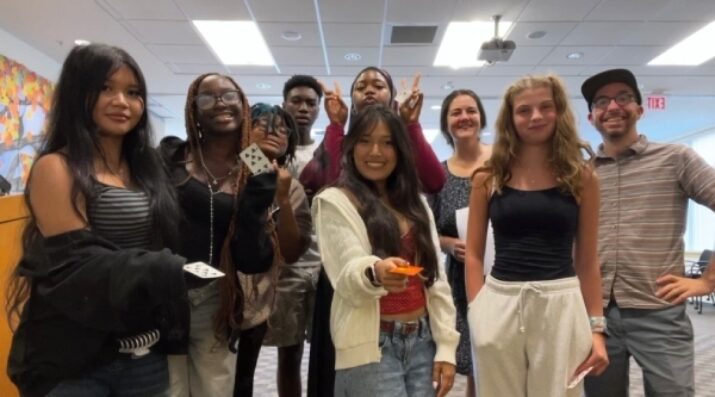
As the YAC matured, however, its role expanded beyond providing feedback. Members began taking on increasingly substantive responsibilities and contributing directly to UP’s programs and organizational work. They co-designed and facilitated our annual Power² Summit, explored alternatives to traditional high school transcripts, wrote for our Trailblazers publication, and joined the planning team for an international seminar on student voice. Two YAC members also served as voting members of UP’s Board of Directors, extending youth participation into formal organizational governance.
One project during this period illustrates the YAC’s growing capacity to shape not only what UP did, but how we did it. YAC members brought youth and adults together for a remote dialogue using the Fishbowl Protocol. Participants reflected candidly on when youth-adult partnerships worked well—and when they did not. The dialogue created space for two-way feedback, surfaced tensions and challenges, and generated concrete strategies for building more authentic and effective collaboration. Importantly, young people were not simply asked to evaluate UP’s work; they helped create the conditions for adults and youth to examine the partnership itself.
These experiences began to challenge the boundaries of the advisory model. While the YAC created meaningful opportunities for youth voice and leadership, the structure still positioned young people largely as a distinct group brought into the organization to provide perspective. The next stage of development would require a deeper question: What would it look like for young people not simply to advise the organization, but to be embedded within its day-to-day work and share responsibility for moving it forward?
Stage 2: Youth ACTION Council
COVID-19 shifted the YAC’s emerging in-person relationships online and stalled much of its momentum. At the same time, the pandemic prompted a pivot in the council’s focus.YAC members identified an emerging need and a clear pathway toward action, leading the planning and launch of Learning During COVID. The resulting survey reached nearly 400 young people across Vermont and culminated in a report documenting their experiences of learning during the pandemic. The findings encouraged educators and communities to think differently about what school could—and should—look like moving forward. It was a small but important preview of the YAC’s emerging shift from advising to action.
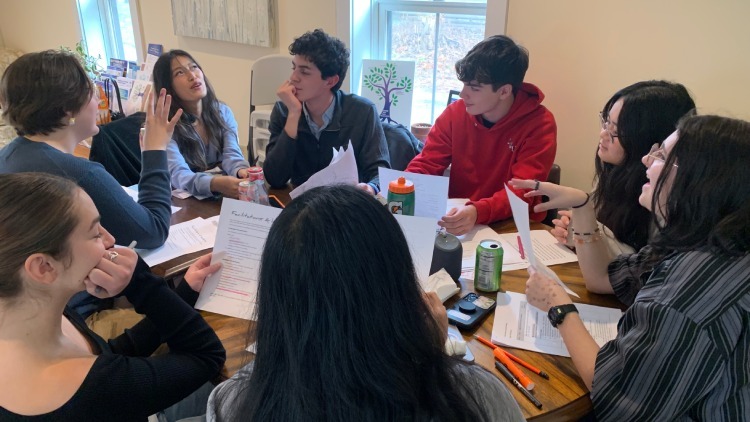
In the 2022–2023 school year, the Council made a deliberate choice to reshape its role, moving beyond its original advisory vision to better meet the needs of both young people and the organization. The YAC adopted a new name—the Youth Action Council—signaling a transition from advising to doing. The YAC established explicit goals to give greater structure and purpose to this emerging work:
- Build a trusting learning community
- Strengthen facilitation and leadership skills
- Standardize protocols across programs
- Launch action projects with visible outcomes
The council’s first major deliverable was a redesigned and more accessible onboarding process for youth facilitators. This work positioned young people to contribute more meaningfully to, and take greater responsibility for, facilitating agendas and supporting UP’s programs. The goal was to create concrete opportunities for youth to contribute to the organization’s daily operations, not simply its strategic conversations. The YAC also drew on UP’s Youth Leadership Module, a resource created by a team of youth interns and YAC members, to provide members with the skills, tools, and confidence needed to meaningfully co-facilitate and lead.
Post-COVID, however, we encountered a challenge that had surfaced at each stage of the council’s evolution: sustaining attendance and participation. Young people were navigating school, multiple jobs, family responsibilities, and changing life circumstances, often leaving limited time and capacity for an unpaid advisory commitment. Rather than interpreting inconsistent attendance as a lack of commitment, we reframed it as information about the structure itself. The question became not How do we get young people to show up? but How might we design the experience so that participation is possible and worthwhile within the realities of young people’s lives?
The smaller group that remained was, in turn, highly consistent and committed, creating the conditions for the council to take on its most ambitious project yet: a multistate research effort exploring how students and community members in Vermont, Delaware, and beyond understood equity in schools. The project combined original interviews, data collection, and a culminating video that was distributed widely, alongside a discussion activity designed for youth-adult teams across UP’s programs. The project demonstrated what was possible when a small group of young people had the opportunity, trust, and responsibility to move an idea from conception to completion.
We also treated the participation challenge itself as feedback. It signaled that the structures designed to support young people needed to bend toward their lives, rather than expecting young people to bend their lives around the organization. Meeting young people where they were—and designing around their strengths, schedules, and capacity—became a cornerstone of the next evolution of the YAC.
Rather than maintaining a youth council that operated alongside UP’s daily work, we began to embed young people directly within it.
Stage 3: From YAC to YIP
During the 2023–2024 school year, a quieter but consequential shift was occurring at UP. Our youth internship base had grown rapidly, with the number of interns doubling to 75 in a single year. It was becoming clear that the Youth Action Council could no longer provide the structure, support, and opportunities that an increasingly large and diverse group of young people needed. That growth became the catalyst for the Youth Internship Program (YIP), a formalized pathway designed to:
- Provide a clear and supportive pathway for young people to develop as leaders and professionals, both across the organization and within individual program teams
- Offer high school students opportunities to earn school credit while gaining meaningful workforce experience and applied learning opportunities
- Strengthen UP’s approach to preparing young people for postsecondary success through intentional development of leadership, facilitation, collaboration, and workplace skills
- Create a durable sense of community and belonging for young people and adults alike
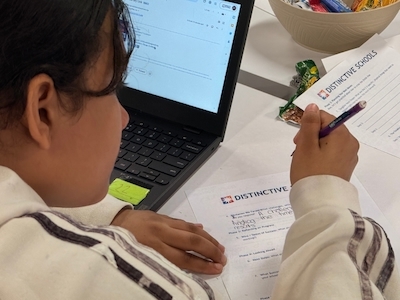
Rather than maintaining a youth council that operated alongside UP’s daily work, we began to embed young people directly within it. The YIP introduced a new Youth Program Specialist (YPS) role, onboarding ten experienced UP interns directly into staff functions across local program teams, curriculum development, communications, and research.
YPSs participated in weekly staff meetings, established individual learning and professional goals, facilitated the YAC, and worked independently on projects that contributed directly to UP’s mission, vision, and core values. We also invested in full- and part-time Program Associate roles, including a recent college graduate hired directly from undergraduate study and a current college student working part-time, as well as dedicated Program Coordinator and Program Director capacity to build the infrastructure necessary to support the program effectively.
The results were measurable. Survey data from the YIP’s first year showed that interns who invested more than 200 hours in the program demonstrated substantially greater growth in leadership confidence, conflict navigation, agenda setting, and their ability to support UP’s Youth Participatory Action Research (YPAR) process. The findings reinforced an important lesson: depth of engagement, rather than simply participation, was a key driver of meaningful growth.
In collaboration with UP adults, youth staff then designed an additional structure to connect interns across individual program teams and deepen their engagement with the organization as a whole: the YAC Mentorship Model. Each Youth Program Specialist, supported by a Program Associate, mentored a small group of youth interns and met with them monthly to build facilitation skills, foster relationships, and strengthen connections across UP’s programs. This was a thoughtful next step in creating community across the growing internship program, while also surfacing some of the same attendance and participation challenges that had shaped the YAC since its founding.
As the second year of the revamped Youth Internship Program came to a close, we began asking a more fundamental question: Was “Youth Action Council” still an accurate and useful name for what we were actually doing? We reached consensus that the mentorship model, as it had evolved, was no longer an action council and should not be categorized as one. At the same time, we recognized that the YAC, in all of its iterations, had been valued and central to UP’s progress toward its mission.
We therefore made the deliberate decision to retire the Youth Action Council altogether. At its inception, the YAC filled an important gap: it created a structure through which UP could begin living its commitment to authentic youth-adult partnership internally. Over time, however, the gap it was created to fill no longer existed in the same form. Through more than three years of experimentation, reflection, and iteration, we had built organizational structures and practices that gave young people meaningful opportunities to lead projects, participate in decision-making, work alongside adults, and develop professional skills as an integrated part of UP’s everyday operations.
The YAC had not failed. It had done its job—and its success made it possible to build something different. What began as a mechanism for bringing more youth voice into the organization had evolved into something more embedded: young people were no longer participating primarily as advisors to UP’s work; they were increasingly participating as colleagues and co-creators of it.
Looking to the Future
Our experience offers a takeaway we believe is relevant to any nonprofit or school system seeking to build authentic youth engagement and leadership: organizations should expect, and even lean into, the need to redesign as they learn.
The YAC, in each of its forms, was never really about the council itself. It was an ongoing organizational learning process through which we developed the structures, relationships, skills, and culture necessary to make authentic youth-adult partnership possible. The council created opportunities for young people to participate in real decision-making, while also surfacing difficult truths about attendance, participation, sustainability, and what young people actually need to lead effectively. Most importantly, it taught us that meaningful youth engagement is not defined by a single seat at the table. It is a continuum—one that may ultimately require moving beyond the very structure that created the opportunity in the first place.
Retiring the Youth Action Council was not an ending. It was a recognition that the work had outgrown its original form and needed to evolve. In this 2026-2027 school year, we have welcomed five new Youth Program Specialists and 50 Youth Interns into a model in which young people are not simply consulted about the organization’s work. They are part of the staff, contributing to daily operations, shaping programs, leading alongside adults, and helping determine where UP for Learning goes next.
Perhaps that is the most important lesson of the YAC: the goal was never to create a better youth council. The goal was to build an organization in which young people no longer needed a council to have power, voice, and influence.
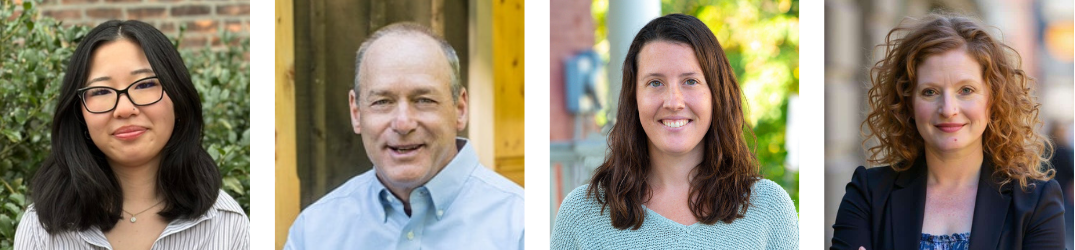
The authors: Ana Lindert-Boyes, Harry Frank, Katie Ingraham, and Lindsey Halman
All photos courtesy of UP for Learning.
Ana Lindert-Boyes, Harry Frank, Katie Ingraham, and Lindsey Halman
UP for Learning
Ana Lindert-Boyes (she/her) is a program associate for UP for Learning, located in Boston, Massachusetts.
Harry Frank (he/him) is a program coordinator for UP for Learning, located in Huntington, Vermont.
Katie Ingraham (she/her) is a program director for UP for Learning, located in Richmond, Vermont.
Lindsey Halman (she/her) is the executive director of UP for Learning, located in Jericho, Vermont.